Operations

Service at a Tap: The Universal Waiter Paging System

How digital pings for service and bills reduce waiter steps and improve table turnover.

TableGreet Team / April 25, 2026 / 12 min read

Service at a Tap: The Universal Waiter Paging System - TableGreet Platform Cover

Improve table turnover and guest satisfaction. A digital Waiter Paging System allows guests to summon service, request the bill, or alert the floor staff with a single tap, reducing waiter steps and floor noise.

Enterprise Insight

An operational guide on implementing digital paging, table-map routing, and optimizing service workflows to deliver discrete, high-speed guest assistance.

  • Allow guests to ping waiters for help or bills directly from their mobile menu.
  • Route paging alerts to waiters based on active zone table maps.
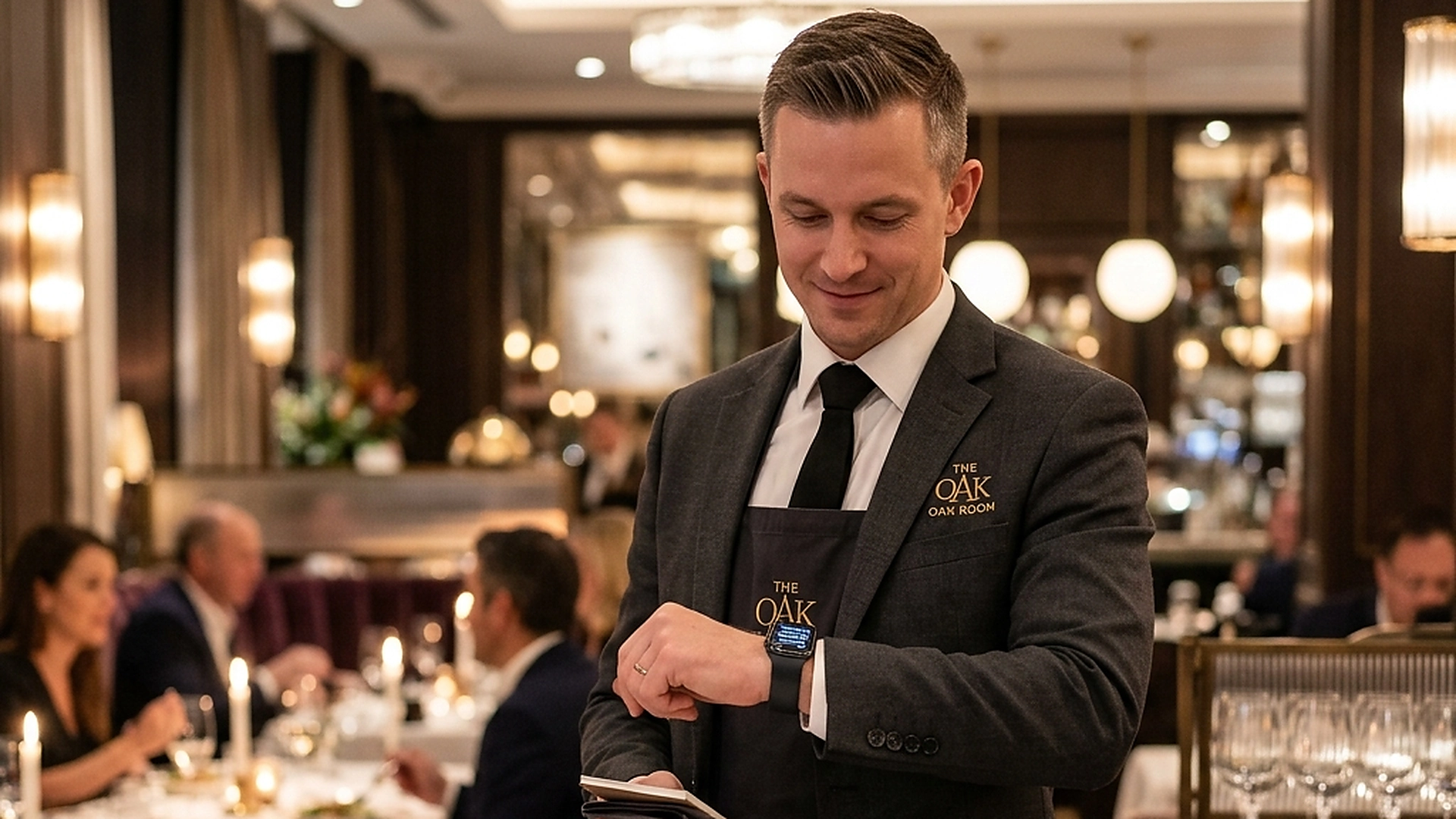
  • Reduce floor noise by replacing waving arms with discrete smartwatch or mobile notifications.
  • Track waiter response times to measure and improve service performance.

1. The Operational Friction of Traditional Table Service

In a traditional restaurant setting, guests often struggle to catch a waiter's attention when they need a refill or want to pay. This leads to awkward waving, shouting, or guests waiting in frustration. For waiters, walking back and forth to check on tables consumes time and leads to fatigue during busy shifts.

A digital paging system bridges this gap. By placing a "Call Waiter" button directly on the mobile menu, guests can request help instantly. Waiters receive the alert with the exact table number, allowing them to respond immediately and saving them unnecessary steps.

2. Routing Alerts to Waiters Using Zone Table Maps

In a large venue with outdoor terraces, private rooms, and a main dining area, routing alerts randomly to all staff creates confusion. Paging requests must be targeted to the waiter assigned to that specific section.

By linking QR table markers to active service zones, paging alerts are routed only to the waiters logged into that zone. This table-map integration ensures that the right server gets the ping, preventing duplicate responses and keeping the floor organized.
Professional restaurant kitchen staff prepping orders
Station-based routing and digital kitchen displays replace chaotic paper tickets, improving cook times.

3. Replacing Floor Noise with Discrete Notifications

Waving arms and shouting break the calm atmosphere of a premium dining room. Paging alerts should be received discretely by the service team.

Waiters can receive notifications on pocket devices, tablets, or smartwatches. A vibration alert shows "Table 12 - Request Bill" or "Table 4 - Request Water". This silent communication allows staff to maintain a professional, calm presence in the dining room.

4. Measuring Service Metrics and Response Times

A major benefit of digital paging is the ability to track service performance. Every call event records the table number, request type, timestamp, and response time (when the waiter clears the ping).

By analyzing these logs, managers can identify service bottlenecks, allocate staff to busy zones, and set clear service goals. This data-driven approach helps maintain consistent service quality, leading to better reviews and higher customer loyalty.

5. Technical Performance, Speed, and Global CDN Caching Architecture

A high-performance digital menu must prioritize loading speed above all else. Under standard restaurant operating conditions, guests scan the menu QR code using mobile data networks that can range from 3G to 5G. A heavy, unoptimized site will load slowly, creating immediate friction. To ensure sub-second page loads, the platform leverages Next.js static site generation (SSG) combined with global content delivery network (CDN) caching at the edge. This means the HTML payload is generated before the guest even sits at the table, allowing the server to answer requests with zero database wait times or runtime calculation delays.

By pre-rendering menu routes into lightweight, static HTML and JSON payloads at build time, the server does not need to execute database queries on every single scan. Instead, the CDN serves the cached static page from a point of presence nearest to the guest's location, reducing time-to-first-byte (TTFB). Real-time updates like item availability, low-stock flags, or daily price changes are handled using client-side hydration, loading the shell page instantly and overlaying status indicators seamlessly without blocking the user's scroll.

Furthermore, asset optimization plays a key role in protecting the guest's data plan and mobile performance. All food images are compressed, resized dynamically based on the device DPI, and served in modern formats (like WebP or AVIF) with appropriate fallback sources. CSS and JavaScript bundles are split, minified, and deferred, ensuring the main browser thread remains unblocked and ready for immediate guest interactions, even on older budget smartphones.

At the database layer, performance is sustained using optimized index structures, connection pooling with PgBouncer, and pre-warmed caching layers. When a restaurant updates their menu, a webhook triggers an incremental static regeneration (ISR) build, purging the CDN cache selectively. This hybrid approach delivers the speed of a static website with the flexibility of a real-time dynamic application, ensuring guest satisfaction is never compromised by server latency.

  • Leverage Next.js static generation to pre-compile menus into ultra-fast static HTML payloads.
  • Cache assets globally on edge CDN nodes to reduce server response times for international diners.
  • Use dynamic WebP/AVIF image rendering to minimize payload weights and accelerate render speeds.
  • Employ selective Incremental Static Regeneration (ISR) to sync menu edits in seconds without rebuilding the entire application.

6. Guest Experience, Form Analytics, and Conversion Optimization

Conversion rate optimization (CRO) is what transforms a simple digital catalog into a high-performance sales engine. When a guest views a menu, every millisecond of hesitation can lead to a lost sales opportunity. To maximize average basket sizes, restaurants must continuously analyze guest browsing patterns. This involves tracking how long guests spend on each menu section, which item modifiers (such as extra cheese or gluten-free bread) are selected most frequently, and where drop-offs occur in the checkout flow.

By implementing frictionless, multistage checkout interfaces, you can guide the guest smoothly from choosing their dish to completing their order. For dine-in guests, this means allowing them to place orders without needing to register a full account, enter verification PINs, or submit credit card details for cash-on-table orders. For delivery and takeaway, saving customer preferences and offering instant mobile wallet payments removes final purchase barriers, keeping checkout times under ten seconds.

Visual hierarchy and design psychology are also critical for driving high-value choices. By positioning premium steak cuts or signature sharing platters at the top of the category view, or highlighting them with custom badges, you leverage natural eye-tracking patterns. Placing pairing recommendations (like drinks or sides) directly inside the item detail modal invites impulse additions, boosting overall venue profitability naturally.

Continuous A/B testing of menu layouts, typography pairings, and photo placements also provides valuable empirical data. For example, a Casablanca cafe might discover that displaying beverage selections in a two-column grid leads to 12% higher sales of specialty lattes compared to a single-column list. These insights turn menu design from a subjective aesthetic choice into a data-driven science, optimizing revenue at every table.

  • Minimize checkout fields and remove account registration barriers to speed up guest decisions.
  • Track item view-to-cart conversions to identify high-margin dishes that require better descriptions.
  • Run continuous layout experiments to optimize visual hierarchy and increase category click-through rates.
  • Present upsell recommendations dynamically within the ordering path without disrupting navigation flow.

7. Security, Data Privacy, and RLS Database Rules

Operating a modern digital menu platform requires strict compliance with international security and data protection regulations, especially when processing payments or guest information. The system must implement row-level security (RLS) policies at the database layer to ensure that tenant data remains isolated. This means that a manager from one venue cannot read or write orders, menus, or customer files belonging to another restaurant, preventing data leaks.

From a guest privacy perspective, public QR menus should be completely tracker-free and cookieless where possible. Standard browsing of dishes and reading descriptions does not require any personal identifiers, maximizing user trust and complying with GDPR and local data protection regulations. When a transaction occurs, customer contact information is stored securely with end-to-end encryption, and payment card details are never saved directly on local servers.

At the network layer, API calls are protected by rate-limiting rules, token authorization, and automated security scanning. This prevents malicious bots from scraping menu data or submitting fake order requests that overwhelm the kitchen. Administrative interfaces require strong passwords, multi-factor authentication, and log in alert histories, keeping dashboard settings safe.

Finally, preventing QR code hijacking and redirect injection is a critical operational safety priority. Attackers have been known to paste malicious QR stickers over legitimate restaurant stands, directing guests to phishing sites. Using verified subdomain routing (e.g., tablegreet.com subdomains) and SSL validation ensures that guests scan a safe, secure, and authentic link, protecting both diner finances and restaurant reputation.

  • Enforce strict row-level security (RLS) database policies to guarantee tenant isolation.
  • Build cookieless, tracker-free guest menu interfaces to respect user privacy and GDPR.
  • Secure all transaction traffic with HTTPS and enforce subdomain validation for physical QR scans.
  • Implement automated rate-limiting and authorization rules to block malicious bot queries.

8. Continuous Integration, Testing, and Deployment Workflow

To guarantee production stability for hundreds of venues operating in real-time, the platform is backed by a robust Continuous Integration and Continuous Deployment (CI/CD) pipeline. Before any code change is merged into the production branch, it undergoes static analysis, formatting checks, and a suite of automated unit and integration tests. This prevents regressions from affecting the core user workflows on the live site.

Browser-level end-to-end tests (built with Playwright and Cypress) simulate guest scans, item selections, and checkout completions across simulated mobile devices. These tests run in virtual containers on every commit, verifying that essential UI routes, language mirrors, and checkout forms function correctly under diverse browser layouts and network conditions before release.

Deployments are managed through edge hosting solutions, pushing updates globally to CDN nodes in seconds. The deployment pipeline supports instant rollbacks, allowing developers to revert builds to a previous stable state if runtime issues occur on the live site, protecting restaurant checkouts from prolonged service interruptions.

Finally, production logging and alert engines track site health metrics, database logic, and API response errors. These automated monitoring systems notify the engineering team of server issues before they impact guests at the table, maintaining a 99.9% uptime standard for hospitality operations.

  • Run automated browser-level end-to-end integration tests to verify critical cart workflows.
  • Deploy updates globally to edge nodes in seconds with instant rollback capabilities.
  • Monitor serverless functions and API errors in real-time to maintain high site stability.
  • Enforce strict static analysis and code checks to catch bugs before production builds.

9. Database Schema, Migration Strategy, and Multi-Region Scaling

At the heart of the digital menu network is a highly structured database architecture designed to support fast lookups and high write capacity during peak operational rushes. The Postgres database schema organizes menu hierarchies, pricing definitions, customer profiles, and transaction logs using relation models and indexing keys. This ensures queries filter database records in single-digit milliseconds, protecting guest load speeds.

To deploy new features without affecting active tables, database schema modifications are managed using sequential migration scripts under strict version control. Migrations are designed to be non-breaking and backwards-compatible with active client connections. This prevents system downtime or connection dropouts during deployments, ensuring restaurant guests can continue browsing and checking out without interruption.

To handle high concurrent traffic, database read requests are distributed across geo-replicated read-only nodes. This horizontal scaling strategy reduces CPU loads on the primary database cluster, which is dedicated exclusively to processing write transactions (like order submissions and payment updates). PgBouncer acts as a connection manager, optimizing database resource utilization and preventing connection bottlenecks.

Finally, geographic latency optimization is achieved using edge databases and distributed connection endpoints. When a guest scans a menu QR code, the API request routes to the nearest cloud database replica. This local data retrieval reduces network travel times, providing diners with an incredibly responsive, high-performance menu browsing experience.

  • Design optimized database schemas and indexes to handle high concurrent menu queries.
  • Deploy versioned schema migrations sequentially to ensure non-breaking production updates.
  • Distribute read traffic across database replicas to reduce loads on the primary master node.
  • Use geo-replicated connection endpoints to minimize lookup latency for global diners.

10. Operational Excellence and Training Protocols

Achieving long-term success with digital menu solutions requires a commitment to operational excellence and structured training protocols for staff members. Even the most advanced technology can fail to deliver its full potential if the team operating it does not understand how to use it correctly or troubleshoot basic issues. Venues must develop simple training programs and operational playbooks that teach staff how to manage inventory, respond to paging alerts, and guide guests through the scanning and ordering process.

A key element of operational excellence is the creation of daily hardware maintenance checklists. Before opening, front-of-house staff should inspect all printed QR stands for cleanliness and readability. Any scratched or faded stands must be replaced immediately. In the kitchen, chefs should ensure KDS displays are clean and speakers are unblocked, and the manager should perform a quick connection test to verify that the router is operating at optimal speeds.

Finally, establishing customer feedback loops is crucial for continuous improvement. By encouraging guests to share their digital menu experience through short, post-order surveys, venues can gather data on design usability, spelling clarity, and loading speeds. Reviewing these inputs regularly allows managers to make informed, data-driven styling and layout updates in the admin dashboard, keeping the guest experience premium, accessible, and aligned with hospitality standards.

  • Establish structured team training protocols to accelerate technology adoption.
  • Execute daily hardware and printed QR stand maintenance inspections.
  • Monitor post-order guest surveys to gather usability data.
  • Update dashboard settings regularly based on empirical feedback and server analytics.

Frequently Asked Questions

How do waiters clear a paging alert once they attend to a table?

Waiters can swipe to dismiss the notification on their pocket app, or tap a dedicated button on a central floor station, clearing the queue in real-time.

Can guests abuse the button and spam the waiters?

The paging system implements rate-limiting, preventing multiple pings from the same device within a set window (e.g., once every two minutes) to protect staff.

Does the paging system integrate with smartwatches?

Yes. The waiter app supports push notifications that sync with smartwatches, allowing servers to read table requests on their wrist during busy runs.

Final Takeaway

Waiter paging transforms the communication between guests and staff. By replacing outdated gestures with instant, structured digital alerts, you reduce service delays, improve table turnover, and deliver a more attentive dining experience.